
Table of Contents
Achieving a saving of $50,000 represents a significant financial achievement. Anyone who has recently been using social media has probably come across shiny videos claiming that exactly that amount will enable you to buy a property in Dubai, together with high rental yields and tax-free income.
The short answer is that no, you cannot buy a house, a villa, or even a studio apartment in Dubai with $50,000.
At the current exchange rate, 50,000 dollars is equivalent to about 183,650 United Arab Emirates Dirhams (AED). In today’s Dubai real estate market, that sum is still far short of buying property outright. That said, $50,000 is still a considerable amount of money, and depending on your residency status, debt tolerance, and how much you’re willing to take on, it can help you access the market through mortgages, off-plan payment plans, or fractional ownership.
This guide will show you precisely what the costs of property are in Dubai, explain how social media advertisements misrepresent the facts, clarify just how far $50,000 really goes, and outline the exact actions you can take right now.
Can You Buy Property in Dubai for $50K
If you want to find out why it is impossible for $50,000 to buy an entire home, you have to examine the minimum price limits in the freehold areas of Dubai, the particular districts in which non-UAE citizens are legally permitted to own property.
In Dubai property prices are mainly determined by the size measured in square feet, the location, the reputation of the developer, and the facilities available in the community. The following shows the current market prices for various types of property:
Studio Apartments (The Cheapest Entry Point)
- Entry-level Budget Areas (International City, Dubai Investment Park): Prices for existing studios start between AED 350,000 and AED 450,000 ($95,000 to $122,000 USD).
- Mid-Tier Growth Areas (Jumeirah Village Circle, Dubai South, Production City): Studios range from AED 500,000 to AED 700,000 ($136,000 to $190,000 USD).
- Prime Central Areas (Business Bay, Downtown Dubai, Dubai Marina): Studios start at AED 950,000 ($258,000 USD) and easily cross AED 1.5 million.
One-Bedroom and Two-Bedroom Apartments
- Budget Communities: Entry-level one-bedroom apartments start around AED 550,000 to AED 650,000 ($150,000 to $177,000 USD).
- Mid-Tier Communities: Expect to pay between AED 850,000 and AED 1.3 million ($231,000 to $354,000 USD).
Townhouses and Standalone Villas
- Outer Suburbs (DAMAC Hills 2, Town Square, South Bay): The lowest entry point for a three-bedroom townhouse starts near AED 1.3 million to AED 1.6 million ($354,000 to $435,000 USD).
- Established Central Villa Communities (Arabian Ranches, Dubai Hills Estate): Prices start well above AED 3.5 million ($953,000 USD) and go up into tens of millions.
Since the cheapest studio apartment in Dubai is about $95,000 USD, a cash reserve of $50,000 covers approximately half the price of the most inexpensive property in the emirate.
Why Social Media Ads Are Misleading
If the total cost of a home is at least $95,000, then why do so many online advertisements say that you can ‘buy a property in Dubai for $30,000 or $50,000’?
Marketing agencies and property brokers employ a number of standard methods which blur the line between the overall purchase price and the first payment:
- An advertisement that says “Own a home for AED 180,000” usually confuses the down payment (e.g., 10% or 20%) with the total purchase price of a property valued at AED 900,000, rather than referring to the full price of the house.
- The “1% per month” payment plans are frequently promoted by developers, who ask for 10% up front and then 1% each month. Even though the amount you pay initially may be under $50,000, you are still entering into a legally binding contract for the remaining 80% to 90% of the cost of the property.
- The advertised figures almost never take into account government registration fees, agent commissions, or bank charges, all of which add a significant amount to the amount of cash you need at the start.
The Hidden Upfront Fees That Eat Into Your $50,000
Before considering how to spend your $50,000, you should take into account the transaction fees. When buying a property in Dubai there are a number of initial costs which must be paid in cash at the time of purchasing and these fees cannot be included in a conventional home mortgage.
On any property purchase, expect to pay roughly 6% to 7% of the total purchase price in transaction costs:
Dubai Land Department (DLD) Fee: 4% of the total property price. This is the official transfer fee paid to the government.
DLD Administrative Trustee Fee: AED 4,000 plus 5% VAT for properties priced over AED 500,000 (or AED 2,000 plus VAT for properties under AED 500,000).
Real Estate Agency Commission: 2% of the purchase price plus 5% VAT.
Mortgage Registration Fee (If financing): 0.25% of the total loan amount plus AED 290.
Property Valuation Fee (If financing): Typically AED 2,500 to AED 3,500 plus 5% VAT [Flag: Bank valuation fees vary by lender].
Oqood Registration Fee: Typically AED 1,000 to AED 4,000 for registering the off-plan property under your name during construction.
What These Means for Your Budget
With a total cash balance of $50,000 (AED 183,650) you won’t be able to spend the entire amount of AED 183,650 on the down payment, as you’ll have to set aside about AED 30,000 to AED 45,000 for the various fees, which means that you’ll have left with roughly AED 140,000 to AED 150,000 ($38,000 to $40,800 USD) for the actual purchase or deposit.
Strategy 1: Using $50,000 as a Mortgage Down Payment
UAE Residents vs. Non-Residents
The Central Bank of the United Arab Emirates has set strict limits on the amount that banks can lend to people who want to buy homes:
For UAE Residents
The amount you can spend, AED 700,000, will allow you to purchase a spacious studio or a small one-bedroom apartment in well-established mid-range areas such as Jumeirah Village Circle (JVC), Dubai Silicon Oasis, or Production City.The only way if you want to be the full owner of a physical property is to use your $50,000 as a down payment on a property that is financed by a bank.
For first-time home buyers, a minimum down payment of at least 20% of the property’s value is required when the property costs less than 5 million AED, and the bank will finance the other 80%.
The maximum amount you can spend is AED 700,000 ($190,500 USD), on the condition that you use AED 140,000 of your $50,000 for the 20% down payment and keep the remainder for covering the closing costs.
For Non-Residents (Living Outside the UAE)
- The UAE banks view non-resident borrowers as higher risk, the loan-to-value ratios available to them are generally limited to 50% or 60%. This means you need a 40% to 50% down payment.
- The maximum amount you can spend on a property is about AED 350,000 (£95,300 USD) if you make a down payment of 40% (which is AED 140,000).
- The amount you can spend is AED 350,000, which limits non-residents to entry-level studio apartments in areas with a budget such as International City or the outlying blocks of Dubai Investment Park.
A Practical Math Example for Resident Buyers
Let’s trace every dirham for a resident buying an AED 700,000 studio apartment in JVC:
| Item | Cost in AED | Cost in USD |
| Property Purchase Price | AED 700,000 | $190,500 |
| 20% Cash Down Payment | AED 140,000 | $38,100 |
| 4% DLD Registration Fee | AED 28,000 | $7,625 |
| DLD Admin Trustee Fee | AED 4,200 | $1,143 |
| 2% Brokerage Fee (+ VAT) | AED 14,700 | $4,000 |
| Bank Valuation & Admin Fees | AED 3,500 | $953 |
| Mortgage Registration Fee | AED 1,690 | $460 |
| Total Cash Needed at Closing | AED 192,090 | $52,281 |
In this realistic scenario, your $50,000 covers nearly the entire upfront cash total needed to buy a modern $190,500 apartment in a high-demand rental neighborhood. You would only need an extra $2,281 to finalize the deal.
Strategy 2: Off-Plan Developer Payment Plans
Another option instead of getting financing from a bank is to purchase real estate that is currently being constructed or is still in the planning stage.
Developers in Dubai are well known for providing flexible payment arrangements which allow buyers to make their payments in instalments directly to the developer and thus avoid going through bank mortgage approvals while the building is being constructed.
How an Off-Plan Purchase Works with $50,000
Instead of paying a single large down payment, off-plan structures split costs across construction milestones:
- Initial Booking Fee: Usually 10% to 20% of the unit price.
- DLD Fee: 4% paid immediately at booking.
- Construction Installments: 5% to 10% paid every four to six months until project completion.
- Handover Payment: The final balance (often 30% to 50% or even 70% Depending on the developer) due when construction finishes and you receive the keys.
Example: Buying an Off-Plan Studio
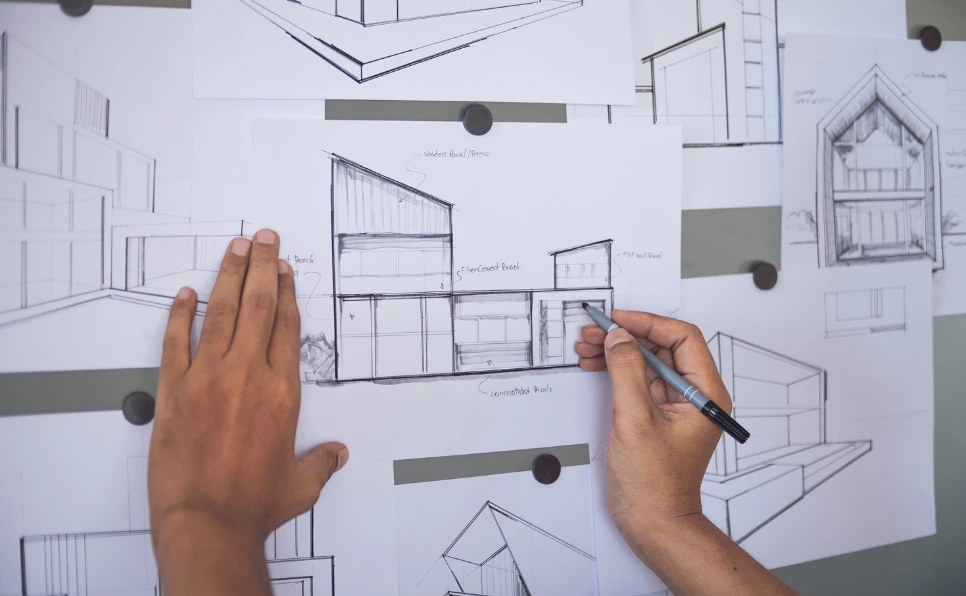
Consider an off-plan studio priced at AED 650,000 ($177,000 USD) in Dubai South with a 50/50 payment structure (50% during construction, 50% at handover):
- Booking Deposit (10%): AED 65,000 ($17,700 USD)
- DLD Fee (4%): AED 26,000 ($7,080 USD)
- Total Due on Day 1: AED 91,000 ($24,780 USD)
Your $50,000 (AED 183,650) easily covers this initial requirement of AED 91,000. You will have AED 92,650 ($25,220 USD) left in cash, which can cover your next two or three milestone payments over the next 12 to 18 months.
The Real Risk of Off-Plan Payment Plans
Off-plan payment plans sound simple, but they carry risks you must manage carefully:
- To qualify, you need to have a steady income so that you can make the instalment payments every few months. Should you fail to make a milestone payment, the developer has the right to serve you with legal notices and may eventually cancel your contract, which could result in the loss of the capital you have invested, as provided for under the UAE real estate laws [Flag: Default terms and remedies vary by developer agreement and regulatory approvals].
- When the building is finished you will have to pay the balance (for example, 50 per cent). If you haven’t saved that money, you’ll have to obtain a bank mortgage at the time of handover. It then may become difficult to get that loan if either bank policies or your personal financial situation have changed by that time.
Strategy 3: Fractional Real Estate Ownership
If you find that going ahead with a mortgage or agreeing to make quarterly construction payments is too risky, fractional ownership of real estate provides a way to invest your $50,000 without taking on any debt.
Regulated funding platforms such as Stake and SmartCrowd allow individuals to buy fractional shares in residential lettings that generate revenue and are regulated by the Dubai Financial Services Authority (DFSA).
How Fractional Investment Works
- A platform will purchase an apartment that is already available (typically a high-yield studio or one-bedroom unit located in a well-established area such as Dubai Marina or Business Bay).
- The property is divided into digital shares with the lowest amount being AED 500 ($136 USD).
- Investors buy shares equal to the amount of capital they have available.
- The money earned from renting out the property is sent on a monthly basis to the shareholders according to the percentage of ownership they hold.
- When an investment is disposed of after the normal period of two to five years, the investors get their respective share of any capital appreciation.
How to Allocate $50,000 in Fractional Ownership
Rather than putting all $50,000 into a single property, fractional platforms allow you to split your capital across multiple locations and asset types:
- AED 60,000 ($16,300 USD): Invested in a holiday-let studio in Business Bay aimed at short-term tourists.
- AED 60,000 ($16,300 USD): Invested in a long-term rented apartment in Jumeirah Village Circle aimed at working professionals.
- AED 63,650 ($17,330 USD): Invested in an entry-level unit in Dubai Marina targeting steady long-term capital appreciation.
Expected Financial Returns
The net rental yields from residential property in Dubai are generally between 6% and 8% each year once the platform fees, maintenance costs, and building service charges have been deducted.
On an AED 183,650 investment yielding a net 7% annually:
- Annual Passive Net Income: Roughly AED 12,855 ($3,500 USD)
- Monthly Passive Dividend: Roughly AED 1,071 ($291 USD)
This route allows you to have exposure to real estate, receive a monthly income, and also have the potential for capital growth all without having to bear mortgage liabilities, deal with maintenance problems, or enter into negotiations with an agent.
Post-Purchase Ongoing Costs Every Buyer Must Plan For
When you buy a property in person on a mortgage or by paying for it in instalments, you will have to pay ongoing maintenance costs. Most people who are buying a property for the first time forget to provide for these operating expenses:
- The RERA Service Charges: mean that in Dubai, each building imposes an annual service charge of one dirham per square foot in order to cover the costs of security, maintenance, the upkeep of elevators, and the cleaning of the pool. The Real Estate Regulatory Agency (RERA) sets these charges, which vary from 10 dirhams per square foot in suburban areas to more than 30 dirhams per square foot in luxury towers in the Downtown district. For a 500-square-foot studio, the annual amount to be paid will be between 5,000 and 15,000 dirhams ($1,360 and $4,080 USD).
- Property Management Fees: If you are living overseas and you hire an agent to manage tenants, handle maintenance calls, and collect rent, they will charge between 5% and 8% of the annual rent for long-term leases (or 15% to 20% for short-term holiday rentals).
- DEWA and Municipal Charges: Utility setup fees with the Dubai Electricity and Water Authority (DEWA) require refundable deposits ( AED 2,000 for apartments), along with a monthly municipal housing fee equal to 5% of the property’s annual rental value.
What You should Do With Your $50,000?
Your choice depends entirely on your financial situation, residency, and long-term goals:
If You live in the UAE, earn a stable salary, and want a place to live
- The best approach is to use $50,000 as a down payment on the mortgage at 20%.
- The target is a studio or one-bedroom apartment situated in areas such as JVC, Silicon Oasis, or DIP and priced in the range of AED 650,000 to AED 700,000.
- The reason is that when you cease paying rent to your landlord, you build up equity and your housing costs become more stable.
If You live overseas, have stable savings, and want hassle-free passive income
- The best strategy is to have a fractional interest in real estate.
- Objective: Spread your AED 183,650 over three to five properties that are listed on the platform and are located in areas in high demand for rentals.
- The reason is that you avoid having to meet the non-resident mortgage requirements (which call for a 40% down payment), skip over the problems associated with managing property overseas, and begin receiving passive rental dividends immediately.
If You have strong monthly cash flow and want maximum capital growth over five years
- The best option is a studio that is not part of the original plan and comes from a well-known developer.
- The target is a studio costing about AED 600,000 in developing areas such as Dubai South or the zones being expanded by the Land Department.
- Reason: The amount of $50,000 is more than enough to pay the booking fee and meet the early milestones, which will enable you to take advantage of the increase in property value as construction moves forward.