Can I Live in Dubai as a U.S. Citizen in 2026? What You Need to Know Before Making the Move

Table of Contents
When I first looked into what it takes for an American to travel to Dubai, I hit a wall of conflicting facts. Some sources made it seem like you pack a bag and hop on a plane. Others made the tax and visa situation sound like a nightmare.
The truth lies somewhere in the middle.
Can I live in Dubai as a U.S. citizen
Living in Dubai as a US citizen in 2026 is doable. For many, it offers great job and financial opportunities. Moving to a city known for its tax-free status and high living standards is exciting. Moving from halfway around the world means you must get key details right. This covers visas, local budgets, lifestyle factors, and your ongoing tax duties to the IRS.
Here is a practical, zero-fluff guide to what life in Dubai truly looks like for Americans.
1. Getting In: Your Visa Options Breakdown
As an American, you can arrive at Dubai International Airport with your US passport. You’ll get a free 30-day visitor visa right away. That’s great for a short visit, but if you want to build a real life here, you’ll need a long-term residency visa.
1. The Basics: Entering Dubai
- 30-Day Visa on Arrival: $0 (Free)
- 90-Day Multiple-Entry Visa: $0 (Free)
- The Catch: Your passport must be valid for at least 6 months from your arrival date, and you must have a confirmed return or onward ticket. You don’t need to apply for anything in advance; they will stamp your passport at airport immigration.
2. Staying Longer: In-Country Extensions
If you fall in love with the city and decide to extend your stay by another 30 days without leaving the United Arab Emirates, you can apply online through official government portals.
- Official Government Fee: ~$315 to $340 (depending on the exact portal used).
- Agency Price: ~$370 to $400 if you hire a private travel agency to handle the paperwork.
- Insider Tip for your readers: It is often significantly cheaper to do a quick “visa run” (flying to a neighbouring country like Oman and returning) than to pay the in-country extension fees!
3. The Penalties: Overstay Fines
The UAE has a strict policy with zero grace periods for tourists. If you overstay your visa by even one day, the costs add up fast:
- Daily Fine: ~$14 per day
- Mandatory Exit Permit: ~$70 to $95 (a required fee to clear airport customs if you have overstayed)
There are four fundamental pathways most expats take:
A Quick Word on the Golden Visa Myth
You’ll see a lot of hype online claiming the Golden Visa gives you UAE citizenship. It does not. The UAE does not offer a pathway to a local passport through property investment. The Golden Visa offers 10 years of easy residency. You don’t need a local boss or sponsor. This is a big win for long-term planning.
2. Realistic Cost of Living: Breaking Down the Monthly Numbers
Many people think that no personal income tax makes everything in Dubai cheap. It isn’t. Your take-home pay is higher. However, living expenses can differ significantly from those in major US cities.
A professional in a popular expat area needs about $3,500 to $4,500 USD monthly (AED 13,000 to AED 16,500). For a family of four, the budget usually ranges from $6,500 to over $9,000 USD, mainly based on school tuition.
Here is a practical breakdown of monthly expenses in 2026.
| Expense Category | Single Professional (USD) | Family of Four (USD) | Notes |
| Rent (1BR vs. 3BR Villa/Apt) | $1,600 – $2,300 | $3,500 – $5,500 | Often paid via post-dated checks |
| Utilities & AC (DEWA) | $180 – $300 | $400 – $800 | AC usage spikes costs significantly in summer |
| Internet & Mobile | $120 – $160 | $180 – $250 | High-speed home fiber + mobile data plans |
| Groceries | $300 – $450 | $800 – $1,200 | Imported American brands cost 30-50% more |
| Transportation / Car Lease | $300 – $500 | $600 – $1,000 | Gas is cheap; toll gates (Salik) add up |
| Private Schooling (Per Child) | N/A | $1,000 – $2,200/mo | Top American/British curriculum schools |
Housing & Rent Setup
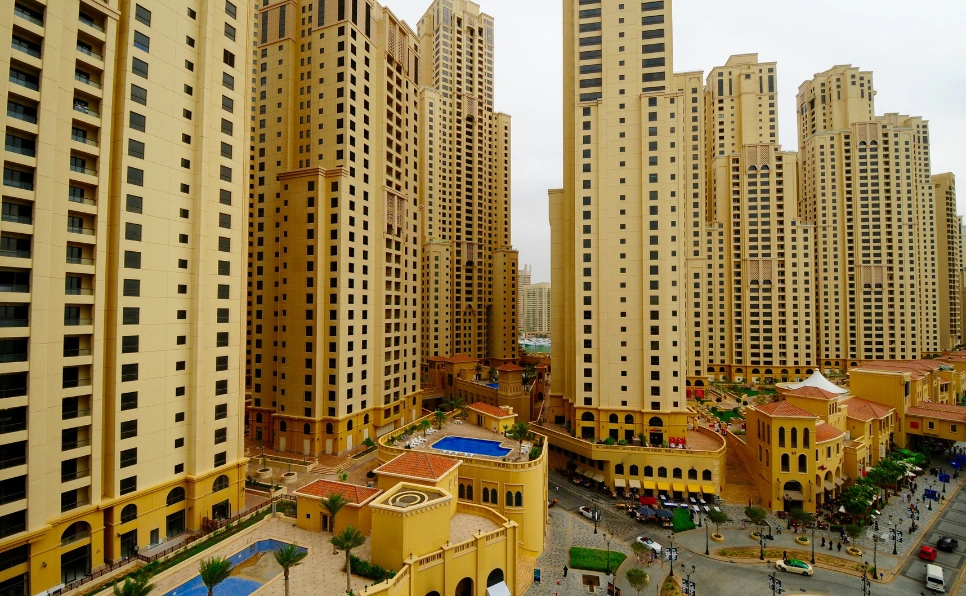
Rent will likely be your largest line item. Popular expat areas are Downtown Dubai, Dubai Marina, Jumeirah Lakes Towers (JLT), and Dubai Hills. They all offer great amenities. However, they can be pricey.
Landlords often surprisingly collect rent. Instead of monthly bank transfers, many ask for rent via post-dated checks. These checks usually cover three, six, or twelve months in advance. Digital payment options are growing month by month. Still, having enough cash on hand when you arrive is important.
Employment and Job Market Realities
Dubai’s economy spans major sectors, including finance, logistics, energy, healthcare, and tourism.
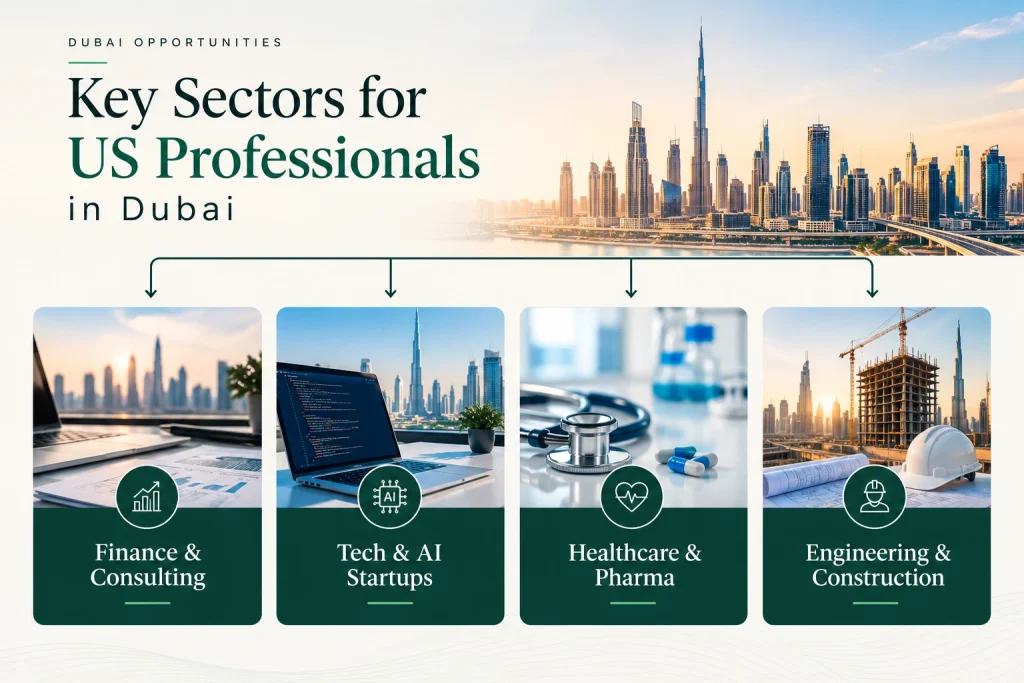
Working in Dubai gives you exposure to a multicultural workforce, with expatriates making up about 85% of the population (Dubai Statistics Centre, 2024).
Key Professional Considerations
Salary Expectations: Compensation programs are often negotiated as all-inclusive monthly figures, though a few employers still offer allowances for housing and training.
Workplace Culture: While English is the primary language of trade, commercial operations often navigate indirect communication styles and strong hierarchical structures compared to traditional US company environments.
Working Hours: The standard working week runs Monday through Friday, aligning with international financial markets.
3. Taxes: The Part Most Expats Get Wrong
Let’s debunk a common myth about moving to the UAE: Living in a zero-tax country doesn’t mean you can skip filing US taxes.
The United States taxes its citizens on all their income, no matter where they live. You will still need to file your annual return with the IRS Foreign Expat Division.
Financial Snapshot: UAE Local Taxes vs. US IRS Obligations
- UAE Tax Structure: 0% Personal Income Tax | 0% Capital Gains Tax | 5% Local Value-Added Tax (VAT)
- US IRS Obligations: Annual Form 1040 | Form 2555 (FEIE) | FinCEN Form 114 (FBAR)
The good news? You likely won’t end up paying taxes twice if you structure your affairs properly:
Foreign Earned Income Exclusion (FEIE): Qualifying expats can use IRS Form 2555 to exclude over $120,000 of foreign-earned income from U.S. federal tax. To qualify, they must spend at least 330 full days abroad in a 12-month period.
FBAR Reporting: If your foreign bank accounts go over $10,000 at any time during the year, you must file FinCEN Form 114 (FBAR).
Banking Setup: Local UAE banks often work with American clients. You may be asked to complete Form W-9 when opening an account. This is due to FATCA compliance.
4. The American Expat Community & Social Scene
Moving around the world can be lonely, but Dubai makes it easy to settle in. More than 85 per cent of Dubai’s population are foreign nationals, and tens of thousands of American expatriates make the city their home.
Whether you’re looking for professional networking, social clubs, or familiar comfort foods, you’ll find an established ecosystem ready to welcome you:
- Professional Networks: The AmCham Dubai (American Chamber of Commerce) hosts regular industry panels, mixer events, and business roundtables that serve as primary networking hubs for US professionals.
- Expat Social Groups: Communities like InterNations Dubai, local Facebook groups (Americans Living in Dubai), and active Meetup circles make it simple to find workout partners, co-working buddies, or weekend beach groups.
- School & Family Networks: Families naturally connect through top-tier American curriculum schools like the American School of Dubai (ASD) and Universal American School, which act as vibrant social hubs for parents.
- A Taste of Home: If you miss home, you won’t have to look far. Major US chains, from Shake Shack and Trader Joe’s imported staples at speciality grocers to Crate & Barrel—are widely available throughout the city’s mega-malls.
5. Climate Realities: How to Prepare for the Weather
If you love sunshine, Dubai delivers year-round. However, the year is very distinctly split into two seasons that shape how people live:
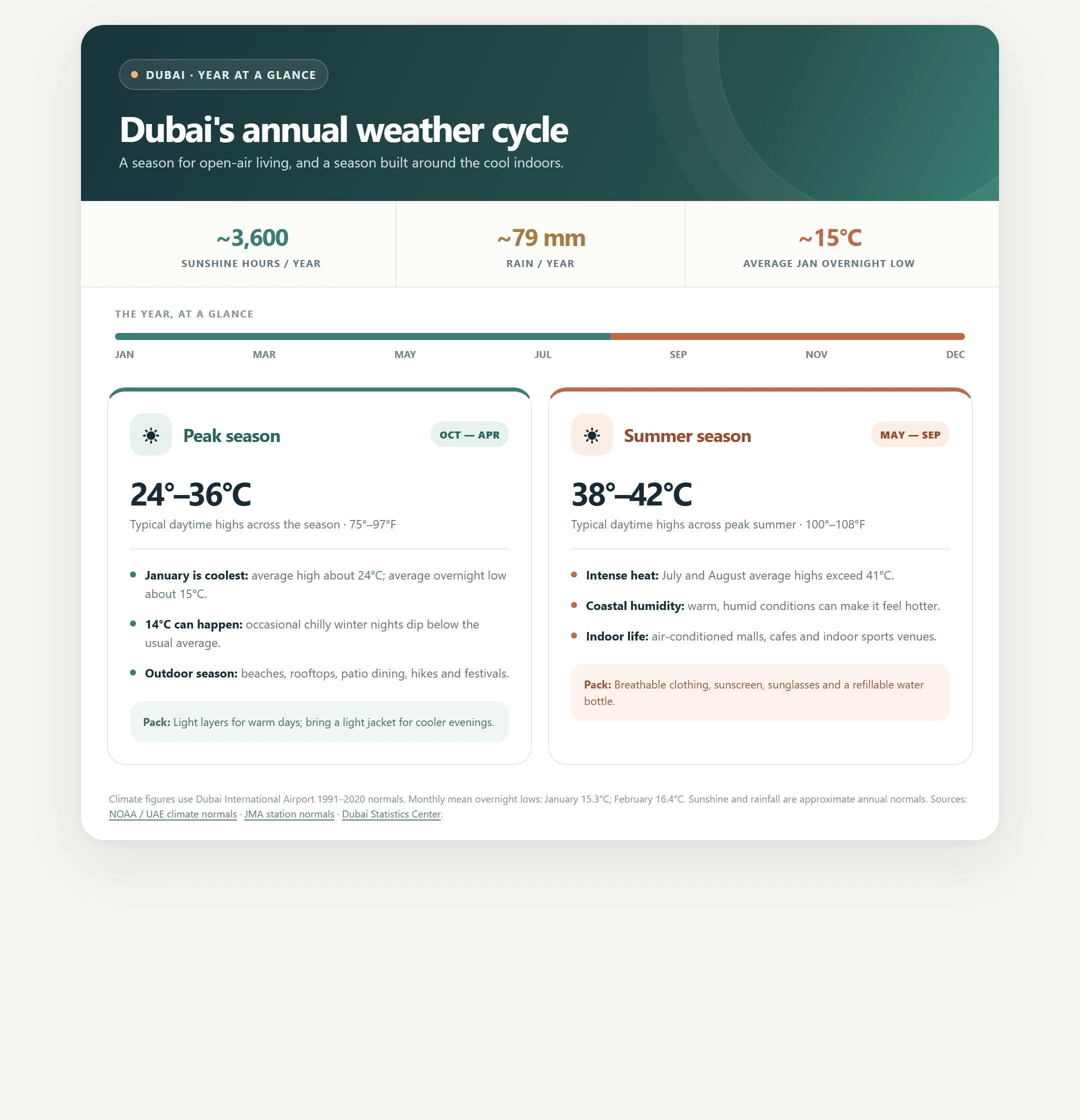
During the winter months, the weather is arguably some of the best on the planet. But during the summer peak, outdoor activity shifts indoors. The city is engineered for this heat: indoor climate-controlled walkways, air-conditioned bus stops, massive indoor sports centres (like Dubai Sports World), and subterranean mall connections mean life continues seamlessly indoors. Many expats take their main annual vacations during July and August to escape the intense summer heat.
6. The Culinary Capital: Dining and Food Culture
Dubai’s food scene is legitimately world-class. Because of its global population, you can eat at an authentic $3 street-food spot in Old Dubai one night and a Michelin-starred dining room in DIFC (Dubai International Financial Centre) the next.
- Global Diversity: You’ll find incredible Middle Eastern food (Lebanese, Emirati, Persian, and Yemeni), along with world-renowned South Asian, Southeast Asian, and Mediterranean spots.
- The Weekend Brunch Tradition: “Brunch” in Dubai isn’t just eggs benedict on a Sunday morning,it’s a social institution. Every Saturday, hotels and restaurants host daytime dining events featuring all-inclusive food packages, live music, and entertainment that bring expat groups together.
- Dietary Needs & Alcohol Availability: Pork products are freely available to non-Muslims in designated, clearly marked sections of major supermarkets (like Spinneys and Waitrose). Alcohol is widely served at licensed hotel restaurants, lounges, and bars. Residents can also easily obtain a free tourist/resident liquor license to purchase alcohol at dedicated retail stores.
7. Culture, Religion, and Local Laws
The UAE is an Islamic country, and Islamic tradition strongly influences local culture, national holidays, and the legal framework. At the same time, Dubai is widely regarded as one of the most tolerant, open, and forward-thinking cities in the Middle East.
Understanding a few key cultural norms will help you adapt smoothly:
- Daily Life & Respect: You will hear the call to prayer (Adhan) throughout the day from local mosques, which quickly becomes a soothing backdrop to daily life. Casual Western clothing (shorts, T-shirts, sundresses, swimwear at pools/beaches) is standard, but modest dress is appreciated in government offices, traditional heritage areas, and places of worship.
- Holy Month of Ramadan: During Ramadan, Muslims fast from dawn to dusk. While rules have modernised significantly, restaurants remain open and operational behind modest screens or with full seating; out of respect, avoid eating, drinking, or smoking publicly in open street areas during daylight hours.
- Safety & Law: Dubai consistently ranks among the safest cities in the world. Violent crime is virtually non-existent, and you can comfortably walk through any part of the city late at night. However, strict laws exist regarding public intoxication, swearing, fraud, and privacy (e.g., taking photos of people without permission). Showing basic respect for local laws ensures a smooth stay.
Final Checklist: How to Plan Your Relocation
If you’re planning to make the jump in 2026, here is the step-by-step sequence I recommend:
- Passport Validity: Ensure your US passport has at least 6 months of validity left from your planned arrival date.
- Determine Your Visa Route: Confirm whether you are moving via remote work, a local job offer, or an investment pathway.
- Document Legalisation: Get your university degrees, marriage licenses, and birth certificates attested by the US Department of State and the UAE Embassy, local HR departments require these for visa processing.
- Consult an Expat CPA: Speak with a tax professional specialising in US expat returns before you board your flight to establish your tax strategy and ensure you qualify for the FEIE.
The Bottom Line
Living in Dubai offers high-level career opportunities, unmatched personal safety, zero local income tax, and a vibrant international lifestyle. As long as you respect local cultural traditions, plan your initial housing budget wisely, and keep your US tax filings compliant, moving to Dubai can be one of the most rewarding life choices you ever make.